How Geographical Pricing Shapes Global Markets: Strategies, Data Analysis, and Competitive Insights
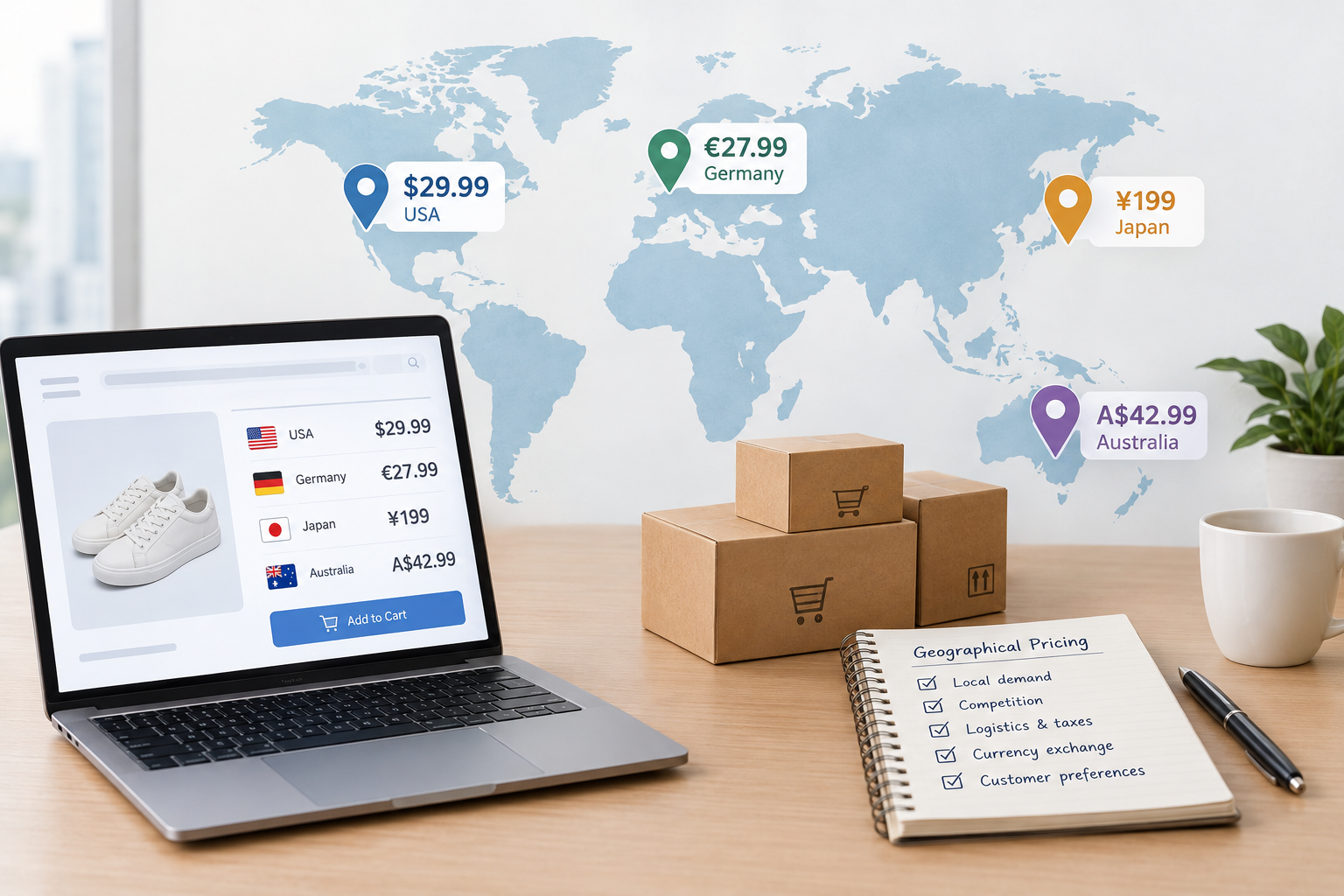
Geographical pricing allows businesses to adjust product and service prices according to regional purchasing power, market demand, competition, and operating costs. This guide explores common pricing models, industry applications, benefits, risks, and how businesses use web scraping and location-specific proxy IPs to monitor global prices and improve pricing decisions.

As the global digital economy continues to expand, businesses are finding it easier than ever to sell products and services across international markets. However, reaching customers worldwide does not mean that every consumer has the same purchasing power, spending habits, or price expectations. For companies looking to expand internationally, determining the right price for different markets has become an essential part of global business strategy.
This is where geographical pricing comes into play.
From e-commerce platforms and SaaS subscriptions to airline tickets and digital products, consumers in different regions may encounter different prices for the same product or service. These differences are rarely accidental. They often reflect a combination of local economic conditions, market demand, competitive pressure, logistics expenses, and taxation policies.
At the same time, the growth of cross-border commerce and global data analytics has increased the need for accurate regional pricing information. Businesses must understand how prices vary across markets, identify competitive opportunities, and make informed decisions based on reliable data.
This guide explores the fundamentals of geographical pricing, its key influencing factors, common pricing models, real-world applications, potential challenges, and how businesses can use web scraping and proxy IP technology to improve global price monitoring.
1. What Is Geographical Pricing?
Geographical pricing is a pricing strategy in which businesses set different prices for the same products or services based on the geographic location of their customers.
Unlike a uniform global pricing model, geographical pricing considers the economic and commercial conditions of individual markets. Businesses may adjust their prices according to local purchasing power, consumer demand, competition, operating expenses, and other regional factors.
For example, a SaaS company may charge $30 per month for its online design software in the United States. However, this price may be less affordable for individual users and small businesses in markets with lower average incomes.
To reach a wider audience, the company may introduce localized subscription prices for selected countries. This allows the business to remain competitive while making its services more accessible to local consumers.
It is important to understand that geographical pricing does not necessarily mean charging more in one region and less in another. Its primary purpose is to establish prices that reflect the commercial conditions of each target market.
Geographical Pricing vs. Dynamic Pricing vs. Personalized Pricing
These three pricing strategies are often used together, but they rely on different factors.
Pricing Strategy | Main Factors | Primary Objective |
|---|---|---|
Geographical Pricing | Country, region, and local market conditions | Adapt prices to regional differences |
Dynamic Pricing | Real-time demand, supply, and market changes | Optimize revenue and sales performance |
Personalized Pricing | Customer behavior, purchase history, and preferences | Provide individualized pricing or offers |
For example, an e-commerce platform that adjusts product prices according to a customer's country is using geographical pricing. If it changes prices based on inventory levels or seasonal demand, it is applying dynamic pricing. Offering different discounts based on membership status or purchase history is an example of personalized pricing.
In practice, businesses may combine these approaches to create more flexible pricing systems.
2. What Factors Influence Prices Across Different Regions?
Geographical pricing involves more than simply converting a product's price into different currencies. Businesses must evaluate several factors before establishing an effective regional pricing strategy.
2.1 Local Purchasing Power
Purchasing power is one of the most important considerations in geographical pricing.
Income levels, living expenses, and consumer spending capacity vary considerably between countries and regions. A subscription fee that seems affordable in a high-income market may represent a significant expense for consumers elsewhere.
Businesses often evaluate local income levels, consumer spending patterns, and market research data to determine whether their proposed prices are appropriate for their target audience.
2.2 Market Competition and Industry Conditions
Competition also plays a major role in regional pricing decisions.
In markets with numerous competing products and services, businesses may need to offer more attractive prices, promotional deals, or additional features to gain market share.
On the other hand, companies operating in markets with limited competition or offering highly differentiated products may have greater pricing flexibility.
Monitoring competitors' prices across different regions allows businesses to understand their market position and identify opportunities to improve their pricing strategies.
2.3 Taxes, Logistics, and Operating Costs
For businesses selling physical products internationally, transportation, warehousing, import duties, and local consumption taxes can significantly influence final prices.
For example, the same electronic product may have different retail prices across countries because of varying import costs and delivery expenses.
Digital products do not typically involve traditional shipping and inventory costs. However, payment processing fees, local tax requirements, and currency settlement expenses still need to be considered.
2.4 Currency Exchange Rates and Economic Stability
International businesses often operate across multiple currencies.
Exchange rate fluctuations can gradually make regional prices less competitive. For instance, if a country's local currency depreciates against the US dollar, a subscription priced in dollars may become increasingly expensive for local customers.
Businesses should regularly review exchange rate movements and adjust localized prices when necessary to maintain a reasonable balance between affordability and profitability.
2.5 Consumer Preferences and Regional Demand
Consumer expectations and purchasing habits also differ across markets.
In some regions, customers may prioritize affordability and essential product features. In others, they may be more willing to pay for brand reputation, premium functionality, and customer support.
Understanding these differences helps businesses establish prices that better match local expectations and market demand.
3. Four Common Geographical Pricing Models
There is no single geographical pricing model suitable for every business. Different industries and business objectives require different approaches.
The following are four commonly used geographical pricing models.
3.1 Zone Pricing
Zone pricing involves dividing a market into different geographic areas and establishing separate pricing structures for each zone.
This approach is commonly used in logistics, manufacturing, and physical product distribution.
For example, a company headquartered in the United States may divide its distribution network into three zones:
- Zone A: Local and nearby markets with standard pricing.
- Zone B: More distant domestic markets with additional transportation costs.
- Zone C: International markets with prices adjusted for cross-border shipping and related expenses.
Zone pricing helps businesses manage regional distribution costs while maintaining a relatively straightforward pricing structure.
3.2 Uniform Delivered Pricing
Uniform delivered pricing means charging customers the same final product price regardless of their geographic location. Average transportation costs are generally included in the product price.
For example, an e-commerce business may offer the same product price and standard delivery charge to customers throughout a country, regardless of their distance from the warehouse.
This model is relatively simple and transparent. It also reduces pricing differences that customers might encounter during checkout.
However, businesses may need to absorb additional expenses when serving locations with significantly higher transportation costs.
3.3 Freight-Absorption Pricing
Freight-absorption pricing occurs when a business absorbs part of the transportation cost to make its products more attractive in specific markets.
This strategy is often used when entering new regions or competing in highly competitive markets.
For example, an international e-commerce company may want to expand its operations in Europe but face competitors with lower logistics expenses. To improve its competitiveness, the company may cover part of the international shipping cost and offer customers a more attractive final price.
Although this approach can help attract new customers, businesses must carefully evaluate the relationship between shipping expenses, profit margins, and long-term growth.
3.4 International Price Localization
International price localization is particularly common among global digital businesses.
Rather than simply converting a base price into different currencies, companies consider local purchasing power, market demand, competition, and payment preferences when establishing prices for individual countries.
For example, a global software platform may charge customers in the United States in USD, customers in Europe in EUR, and offer localized subscription prices in other markets.
Compared with basic currency conversion, price localization places greater emphasis on regional market conditions. It can help businesses reduce purchasing barriers and improve product accessibility.
4. Real-World Applications of Geographical Pricing
Geographical pricing is not limited to a particular industry. As international commerce and digital services continue to grow, it has become an important strategy across multiple sectors.
4.1 Cross-Border E-commerce and Online Retail
Cross-border e-commerce is one of the most common applications of geographical pricing.
Major online retailers must account for different logistics expenses, tax regulations, currency systems, and competitive conditions across countries. As a result, the same product may appear with different prices, discounts, and delivery fees depending on the market.
For international sellers, regularly monitoring regional product prices is essential.
For example, a business selling products in the United States, the United Kingdom, and Germany may need to monitor:
- Product listing prices across different countries.
- Local currencies and exchange rate movements.
- Regional promotions and discount codes.
- Shipping fees and applicable taxes.
- Competitors' pricing strategies.
By continuously collecting this information, businesses can adjust their regional prices and avoid losing competitive advantages because of outdated market data.
4.2 SaaS and Digital Subscription Services
SaaS businesses often have fewer traditional cross-border distribution expenses than physical product sellers, making them well suited to international price localization.
Cloud collaboration tools, online design platforms, data analytics services, and subscription-based software can all adopt regional pricing structures.
For example, a software provider may offer different subscription prices according to the purchasing power and competitive environment of each market.
This approach can help SaaS companies reach a broader international audience while making their products more accessible.
However, businesses must also consider local payment methods, tax regulations, and subscription renewal requirements when managing regional pricing.
4.3 Travel, Hotels, and Airlines
Pricing in the travel industry is strongly influenced by both geographic factors and market demand.
Airlines, hotels, and online travel agencies frequently adjust prices according to departure locations, destinations, local holidays, seasonal demand, and booking conditions.
For example, the same hotel may display different currencies, promotional offers, or package prices across regional booking websites.
For travel analytics companies, collecting pricing information from different markets can help identify regional differences, analyze competitors, and generate more comprehensive market insights.
4.4 Digital Content and Online Entertainment
Digital content platforms also frequently use regional pricing strategies.
Differences in licensing expenses, consumer demand, purchasing power, and commercial agreements can result in different subscription prices for streaming services, music platforms, and online games.
For digital content businesses expanding internationally, understanding local consumer behavior and competitive conditions is essential to establishing sustainable pricing models.
5. Benefits of Geographical Pricing for Businesses
When implemented effectively, geographical pricing can help businesses manage international operations and develop stronger competitive positions across different markets.
Improved Regional Competitiveness
Businesses can adapt prices to local competitive conditions instead of relying on a single global pricing structure. This helps make products and services more attractive to regional audiences.
Expanded International Market Reach
Localized pricing can reduce purchasing barriers and make products more accessible to customers in different countries, supporting international expansion.
Better Revenue and Profit Management
Businesses can evaluate regional costs, demand, and profitability more accurately. This makes it easier to allocate resources and avoid financial losses caused by inappropriate pricing decisions.
Higher Customer Conversion Potential
Prices that reflect local purchasing power and market expectations may reduce purchasing barriers and encourage more consumers to complete transactions.
6. Potential Risks and Challenges of Geographical Pricing
Although geographical pricing offers several business advantages, poorly implemented strategies can create operational and reputational challenges.
6.1 Consumer Trust Issues
If customers discover significant price differences for the same product across regions without understanding the reasons behind them, they may perceive the pricing strategy as unfair.
In an environment where social media and international shopping information are highly accessible, regional price differences can quickly become visible to consumers.
Businesses should therefore ensure that their pricing differences have reasonable commercial justifications and provide clear explanations when necessary.
6.2 Regional Price Arbitrage
Large price differences between markets may encourage cross-region purchasing and resale activities.
For example, third-party sellers may purchase products in lower-priced markets in bulk and resell them in regions where prices are higher.
This can disrupt existing distribution channels and create additional competitive pressure for local distributors.
6.3 Inaccurate Market Data
Geographical pricing depends heavily on reliable market information.
Incomplete price data or inconsistent collection standards across regions can lead businesses to incorrect conclusions.
For instance, one regional product page may display a promotional price while another shows the standard retail price. Without recording discounts, taxes, and collection timestamps, businesses may incorrectly evaluate the actual price difference.
6.4 Legal and Compliance Risks
Different countries have different regulations concerning price transparency, consumer protection, personal data, and cross-border transactions.
Businesses implementing geographical pricing should understand applicable local laws and avoid misleading price displays, unlawful discriminatory practices, or non-compliant data collection activities.
7. How Can Businesses Monitor Prices Across Different Regions?
An effective geographical pricing strategy requires accurate, timely, and representative market data.
However, collecting reliable pricing information from multiple countries is not always straightforward for businesses operating internationally.
7.1 Why Is Manual Price Monitoring Inefficient?
Manually visiting websites from different countries can provide some pricing information, but this approach becomes difficult to maintain as monitoring requirements grow.
Common challenges include:
- Geographic restrictions: Websites may display different content and prices according to the visitor's IP address.
- Frequent price updates: Product prices, promotional campaigns, and inventory levels can change at any time.
- High labor costs: Employees must repeatedly switch locations, visit pages, and record information.
- Access restrictions: Some websites may limit frequent requests, unusual traffic patterns, or automated data collection activities.
In addition, websites do not necessarily determine a visitor's location through IP addresses alone. Browser language, account settings, cookies, device information, and other signals may also influence displayed content.
Simply changing a website's language or currency settings therefore does not guarantee that the correct regional pricing information will be displayed.
7.2 The Role of Automated Web Scraping
Web scraping enables businesses to automatically visit target websites and extract relevant product and pricing information.
Companies can establish scheduled collection tasks to monitor data such as:
Data Category | Examples |
|---|---|
Product Information | Product names, models, and specifications |
Pricing Information | Original prices, discounted prices, and promotional offers |
Geographic Information | Countries, regions, and currencies |
Transaction Information | Shipping fees, taxes, and discount codes |
Product Availability | Inventory levels and availability |
Time Information | Data collection dates and timestamps |
After organizing the collected information, businesses can build regional pricing databases and use them for competitor analysis, price trend research, and market forecasting.
7.3 Why Are Location-Specific Proxy IPs Important for Price Monitoring?
During global price monitoring, IP addresses are an important factor that can influence how websites identify a visitor's geographic location.
Many websites use the geographic location associated with an incoming IP address to estimate where a visitor is accessing the website from. This may affect the language, currency, product information, or pricing displayed on a page.
For businesses conducting cross-regional data analysis, proxy IPs with different geographic locations can help simulate network access from target markets and collect localized information.
For example, an international e-commerce company may want to monitor product prices in the United States, Japan, Germany, and the United Kingdom. By selecting proxy IPs associated with these target locations, the company can access product pages from different regional network environments.
Compared with relying on a single network location, this approach is more suitable for businesses that need to conduct multi-region data collection and market comparisons.
Different proxy types can also serve different operational requirements:
- Residential Proxies: Residential IP addresses are useful for accessing websites from different geographic locations and supporting regional data collection activities.
- ISP Proxies: Combining ISP network characteristics with geographic IP locations, these proxies are suitable for tasks that require connection stability and consistent sessions.
- Mobile Proxies: These are useful for researching mobile network environments, mobile content presentation, and regional differences in mobile access.
It is important to note that proxy IPs primarily help businesses manage their network access locations. They do not guarantee that every website will display identical regional results or automatically bypass website access restrictions. Actual results may also depend on website detection mechanisms, request frequency, browser environments, and other factors.
For businesses, combining suitable proxy resources with standardized data collection processes and automated analysis tools can help establish a more reliable global price monitoring workflow.
8. Best Practices for Implementing Geographical Pricing
To make geographical pricing effective, businesses should look beyond individual price figures and establish a consistent process for collecting, analyzing, and managing market information.
The following practices can help improve implementation.
1. Make Pricing Decisions Based on Actual Market Data
Avoid determining regional prices solely through income levels or simple currency conversions. Consider local competitors, consumer demand, product costs, and market acceptance.
2. Establish Consistent Data Collection Standards
Use the same collection criteria across different regions, including product specifications, currencies, taxes, discounts, and timestamps. This helps prevent inaccurate comparisons caused by inconsistent data.
3. Monitor Regional Prices Regularly
Prices are not static. Businesses should establish monitoring schedules based on their industry and identify competitor price changes, promotional campaigns, and emerging market trends.
4. Use Reliable Regional Network Resources
When conducting cross-regional market research, select proxy IPs that match the target locations and verify their actual geographic information. Businesses should also follow website policies and applicable legal requirements.
5. Maintain Pricing Transparency
Clearly communicate local taxes, shipping costs, and currency conversion details to consumers. Transparency helps reduce misunderstandings and protects long-term brand trust.
6. Continuously Evaluate Pricing Performance
Regularly analyze regional conversion rates, customer acquisition costs, profit margins, and market share. These metrics can help businesses determine whether their current pricing strategies are effective and identify areas for improvement.
9. Conclusion: Data-Driven Insights Are Reshaping Global Pricing Strategies
As businesses become increasingly international, geographical pricing is no longer a strategy reserved for large multinational corporations. Cross-border e-commerce companies, SaaS providers, digital content platforms, and online service businesses all need pricing strategies that reflect the conditions of different markets.
However, effective regional pricing requires more than simply adjusting product prices. Businesses must continuously monitor competitor activities, consumer demand, operating costs, and regional market developments.
For companies conducting global market research and web data collection, choosing appropriate regional proxy IPs is an important part of improving data access efficiency.
IPdunar provides proxy IP resources designed for global business requirements. Businesses and developers can choose different proxy types and geographic locations according to their operational needs, supporting cross-regional network access, market research, and data collection workflows.
With more accurate insights into regional markets, businesses can make better-informed pricing decisions, strengthen their competitive positions, and discover new opportunities in the global marketplace.